Gaeilge - Our Language
Irish is one of the oldest living languages in the world. It belongs to the Celtic family of languages and has been spoken on this island for over two thousand years, long before English arrived, long before borders were drawn, long before anyone thought to write any of it down.
At its height, Irish was the language of poets, brehons, monks and kings. It was the language in which the earliest vernacular literature in Western Europe was written. The monks of early Christian Ireland were copying manuscripts and composing poetry in Irish while much of Europe was still finding its feet. This is our language. It has always been extraordinary.
And then came centuries of suppression.
The Penal Laws of the 17th and 18th centuries stripped Irish Catholics of their rights — to education, to land, to their religion, to their language. Speaking Irish became associated with poverty, with backwardness, with being less than. Parents stopped passing it to their children, not out of shame exactly, but out of love — they believed English would give their children a better life.
The Great Famine of the 1840s dealt the cruellest blow. The areas worst hit were the poorest and most Irish-speaking. Over a million people died. Another million emigrated. The language nearly went with them.
By the time Ireland gained independence in 1922, Irish was in serious trouble. Governments tried to revive it through schools, but the methods were often rigid and joyless — generations of children left school able to recite irregular verbs but unable to have a conversation. For many Irish people, Irish became a source of anxiety rather than joy.
But here is the thing about Irish. It has never given up.
Today something remarkable is happening. Irish-medium schools (Gaelscoileanna) are among the most oversubscribed in the country. Parents who never spoke a word of Irish growing up are choosing to educate their children through it. TG4 broadcasts Irish language television. Raidió na Gaeltachta has been on air for fifty years. Duolingo's Irish course has millions of learners worldwide. Young people are reclaiming the language as something cool, something theirs, something worth fighting for.
And all over the world, in the Irish diaspora from Boston to Brisbane, people are feeling that pull back towards their roots. Towards something that is uniquely, irreplaceably Irish.
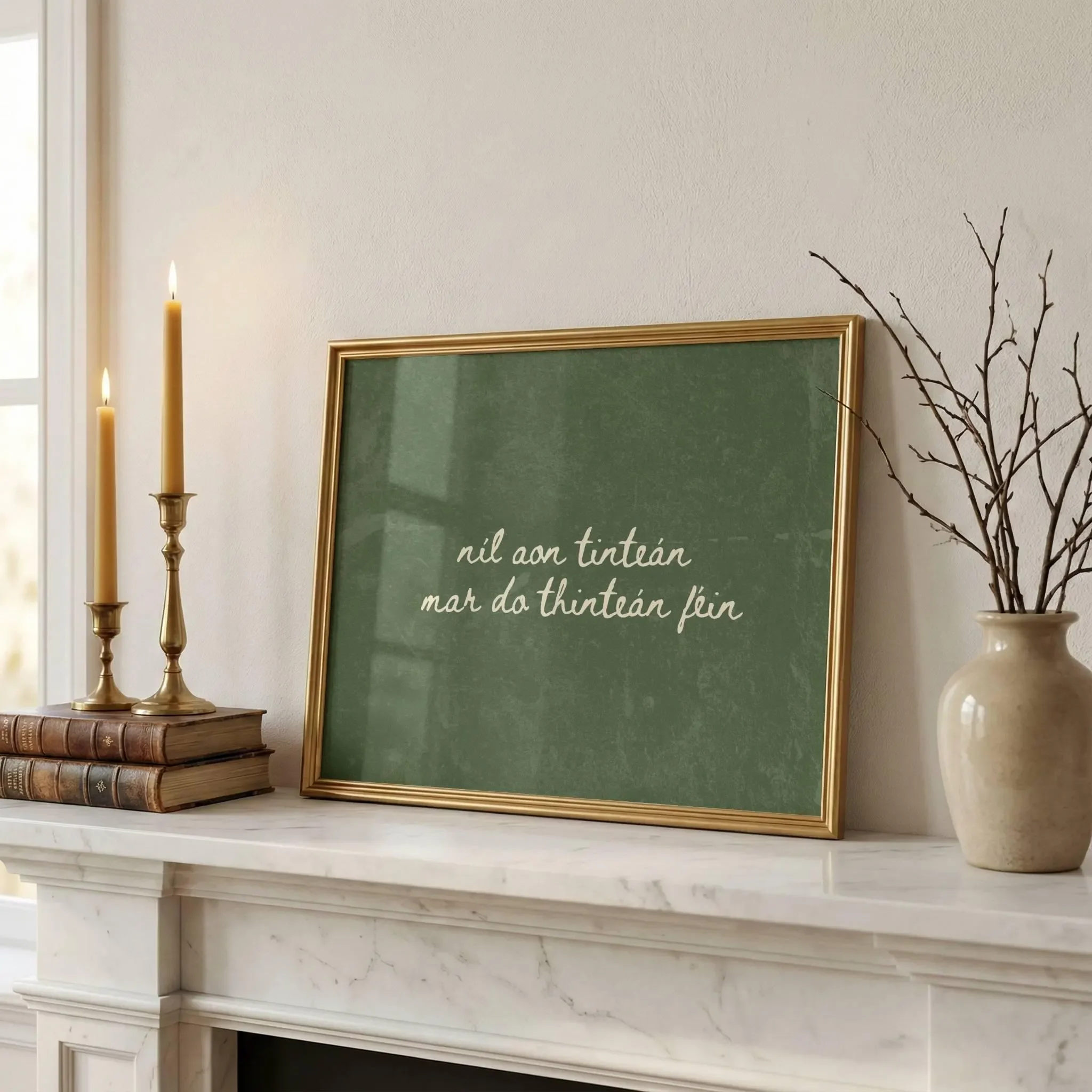
Is fearr Gaeilge bhriste ná Béarla cliste. Broken Irish is better than clever English.
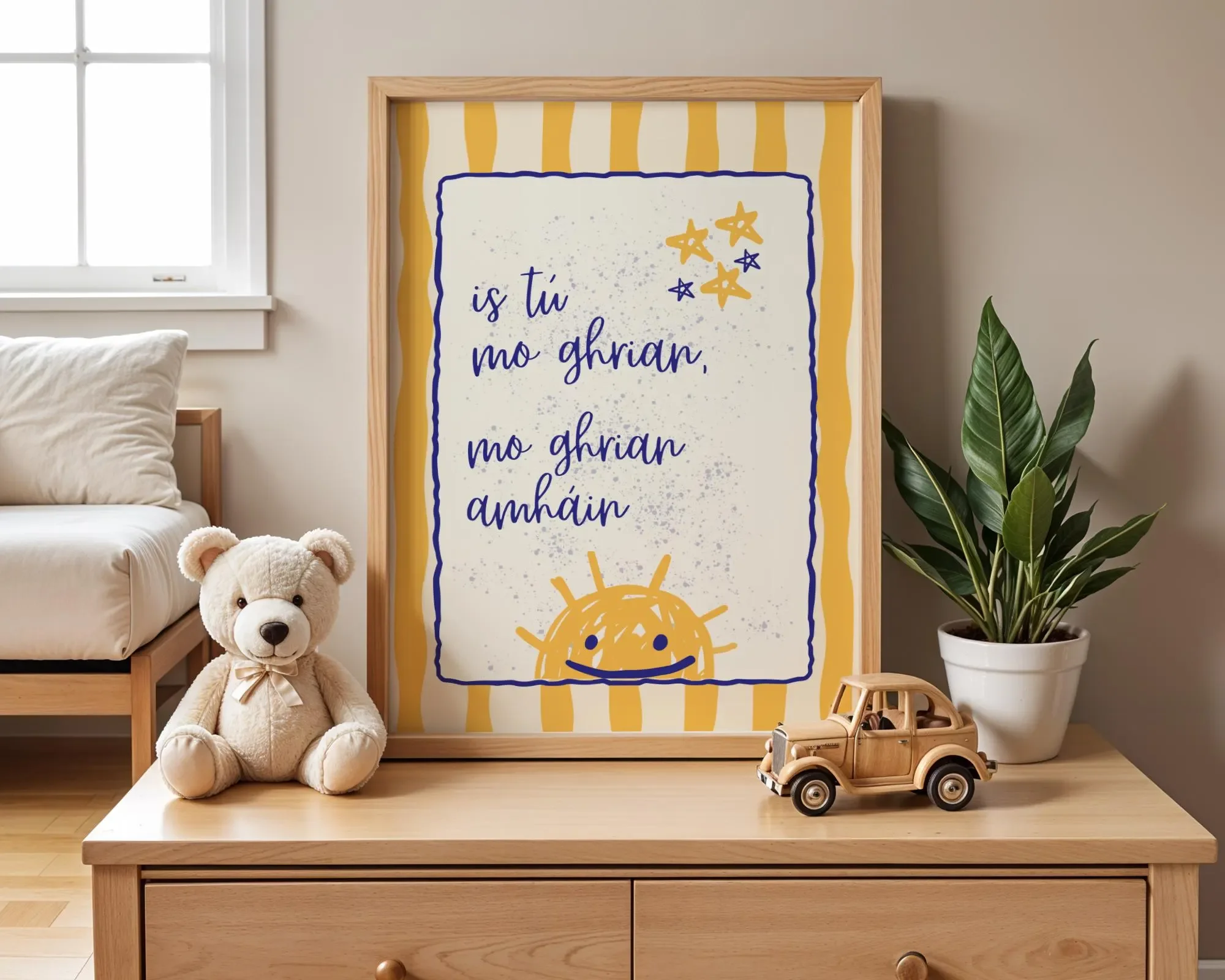
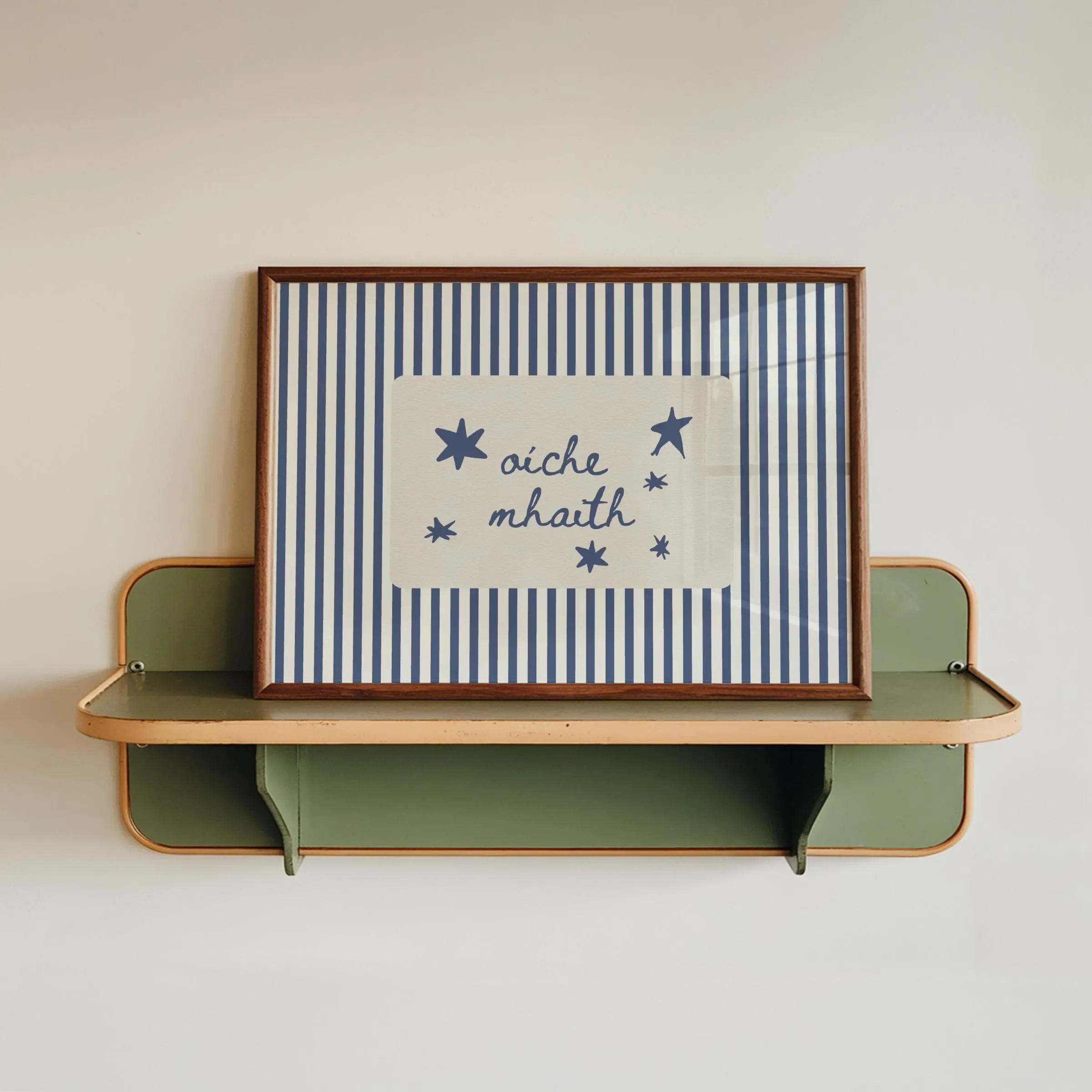
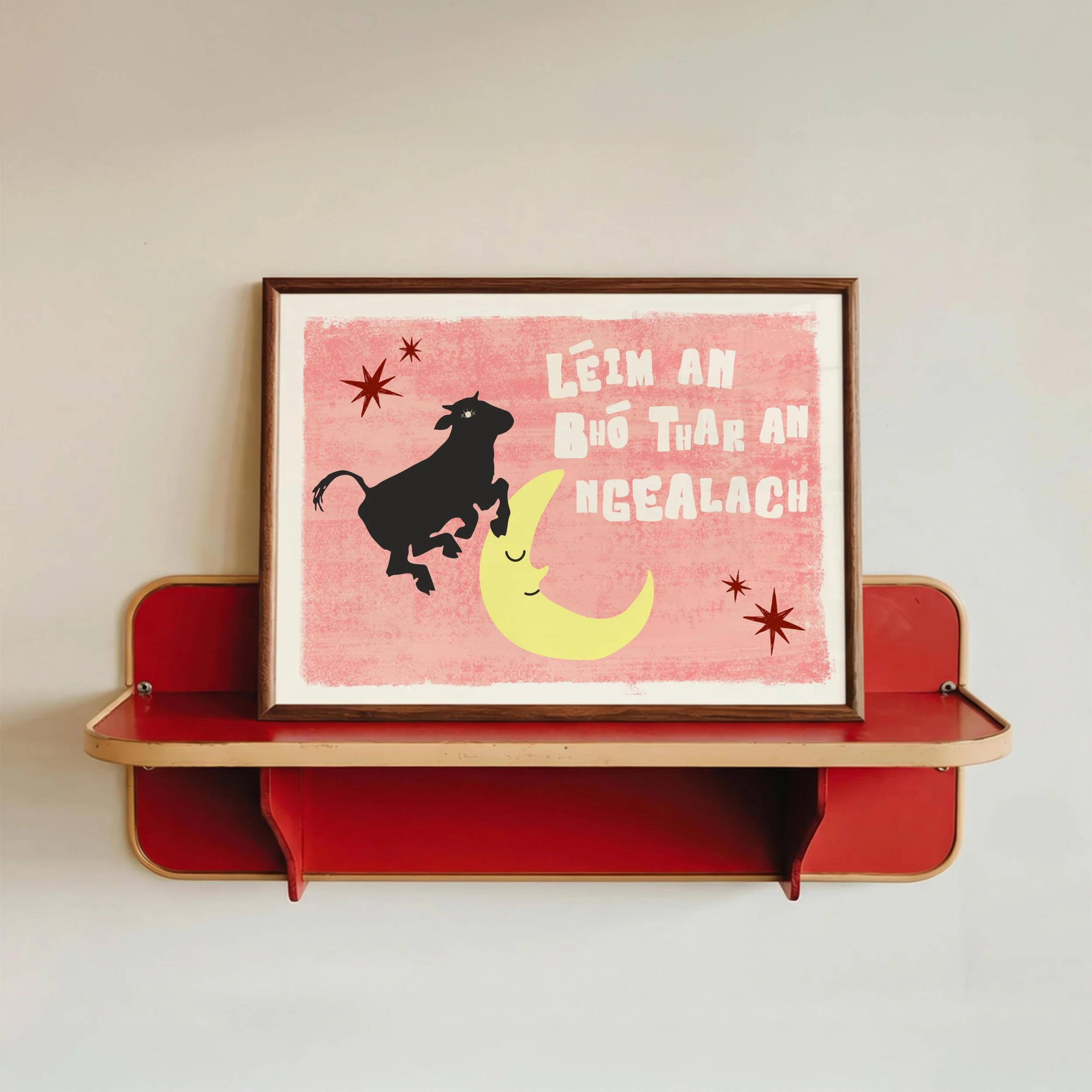
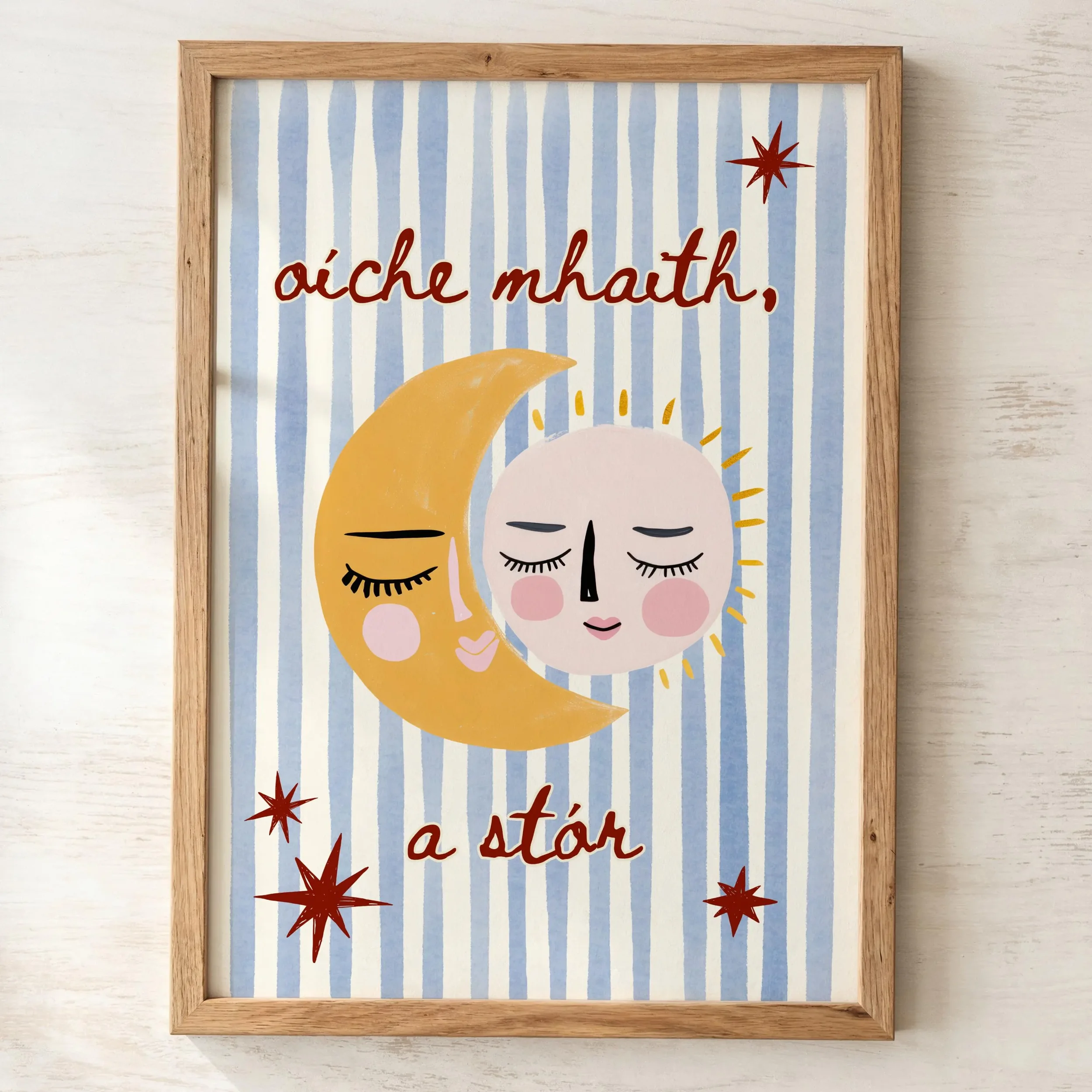
Whatever your relationship with the language — whether you grew up speaking it, stumbled through it in school, or are only now discovering it — you are part of this story. Every word spoken, every phrase learned, every print hung on a wall is a small act of love for something that deserves to survive.
Ogham - Scríbhneoireacht na Sean-Ghaeilge
The Ancient Writing of Ireland
Long before the Latin alphabet arrived on these shores, the Irish had their own system of writing. Carved into stone, scratched into wood, etched into the edges of standing stones that still dot the Irish landscape today - Ogham is one of the oldest forms of writing in the world, and it is uniquely, entirely ours.
What is Ogham?
Ogham (pronounced OH-am) is an early medieval alphabet used to write Primitive Irish, and later Old Irish. It consists of a series of lines and notches carved along a central stem line — usually the edge of a stone. Each group of marks represents a letter, and together they spell out names, dedications and inscriptions that have survived over a thousand years of Irish weather and history.
There are around 400 Ogham stones still in existence across Ireland, Scotland, Wales and the Isle of Man. The largest collection is in County Kerry, in the Dingle Peninsula — right in the heart of the Gaeltacht. If you've ever driven through Kerry and noticed a tall standing stone with markings along its edge, you've seen Ogham in the wild.
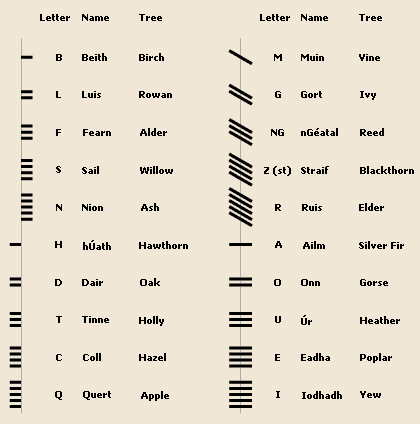
The Ogham Alphabet — Aibítir Oghaim
The Ogham alphabet has 25 characters, divided into four groups called aicmí (families). Each character is named after a tree or plant — because the ancient Irish saw the natural world and the written word as deeply connected.
Every letter named after a tree. Every word rooted in the natural world. Is that not the most Irish thing you've ever heard?
Ogham i d'Teach — Ogham in Your Home
At Croí & Co. we've fallen completely in love with Ogham. There is something so quietly powerful about seeing your name, or the name of someone you love, written in a script that has been part of this island for over 1,500 years.
We are currently working on a collection of Ogham name prints — each one hand-designed to be framed and treasured. Whether it's a new baby's name for the nursery wall, a wedding gift, a first home present or simply a celebration of your Irish heritage — an Ogham name print is something genuinely unlike anything else.
Coming Soon
Be the first to know when our Ogham collection launches — follow us on Instagram @croi_co for updates, sneak peeks and behind the scenes of the designs as they come to life.
Something ancient. Something Irish. Something worth waiting for.